Multicultural Aleppo: Coffee And Puppets
A downloadable game
This is an in-progress build of Multicultural Aleppo: Coffee and Puppets.
A historical narrative adventure game based in 1928
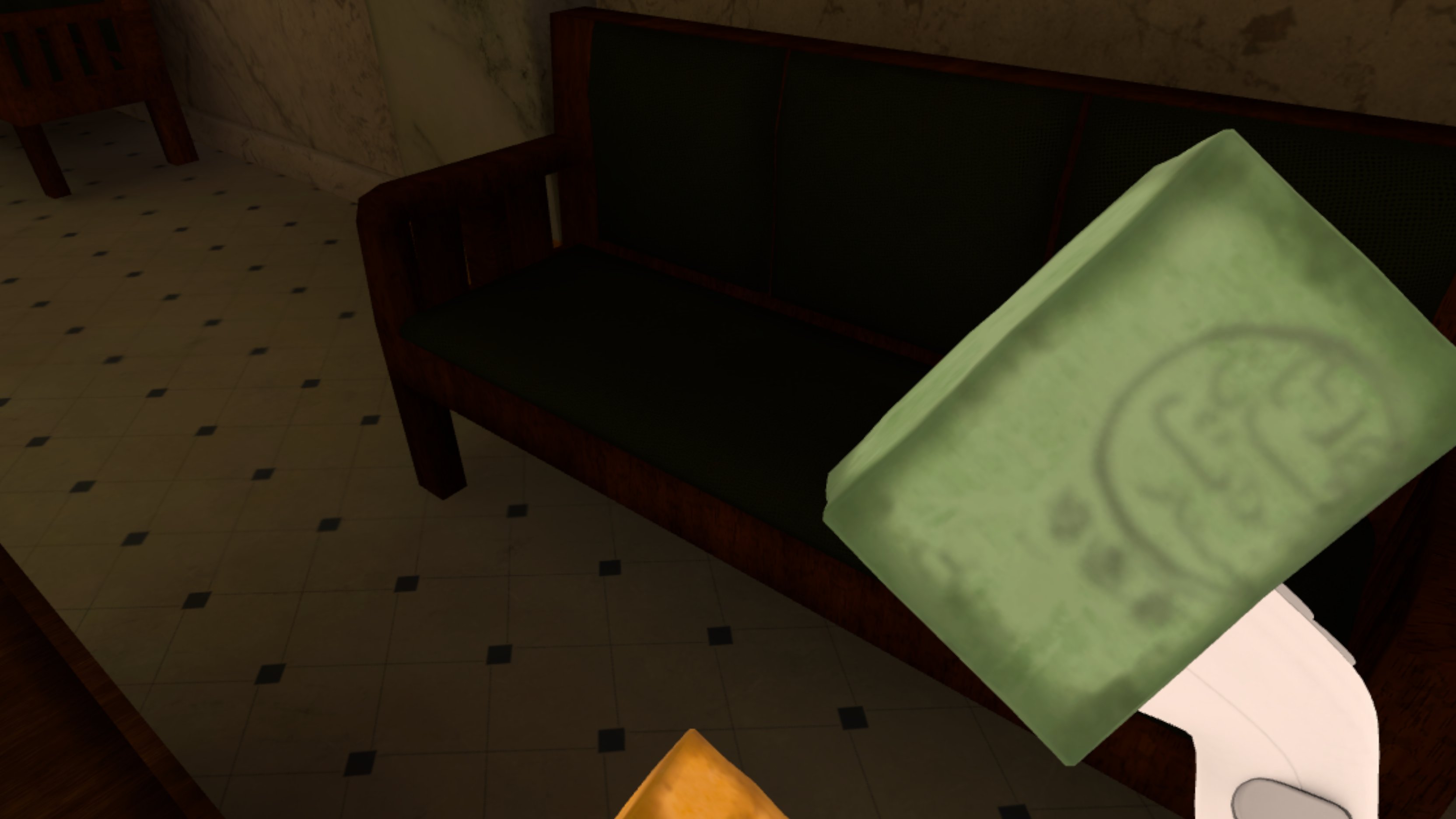
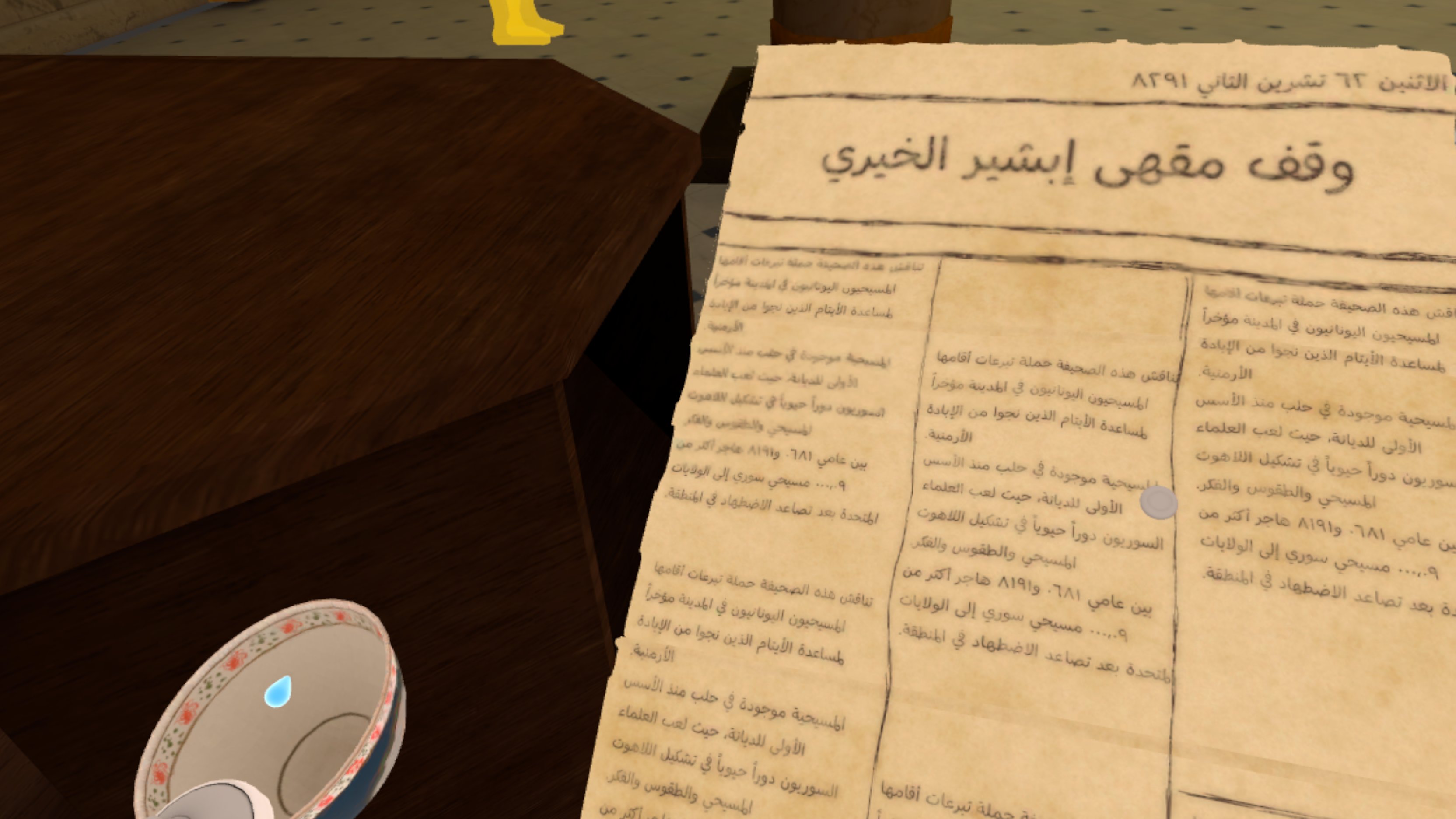
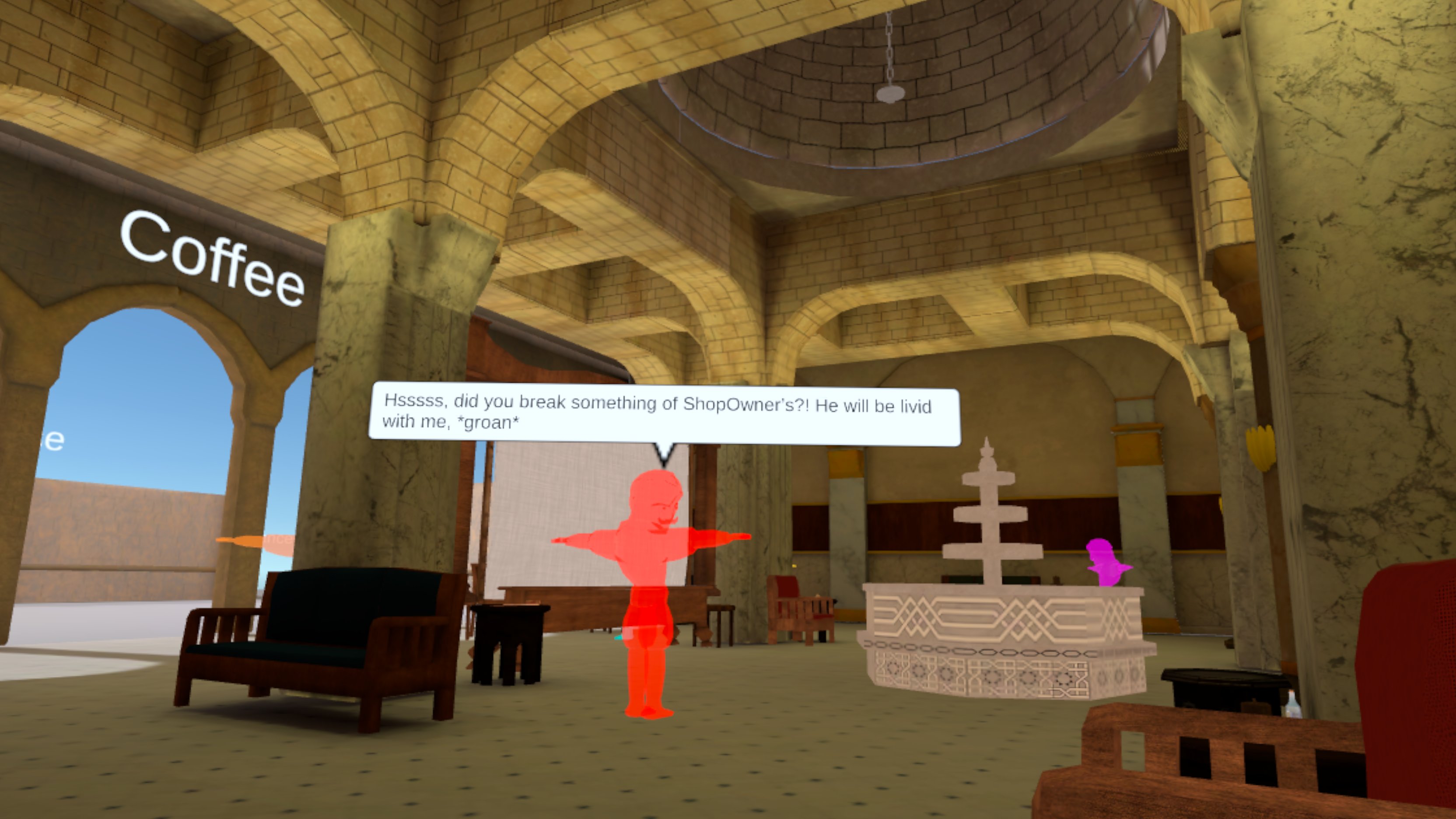
Multicultural Aleppo highlights culture and arts through a narrative, interactive experience. Players take on the role of a young child tasked with helping their family to host a traditional garden party in 1928. During the experience, the Players explore key locations such as a coffee house, a marketplace, an affluent private home, the Baron hotel, and the local neighborhood. While playing, they engage in cultural crafts such as soap making, puppetry, and tarab, while interacting with fictional characters whose stories highlight human rights themes through an Abrahamic lens.
The goals for the full experience are to:
- Understand the rich, multicultural history of coexistence in Aleppo
- Respect the diverse stories from hundreds of years of immigration to Aleppo
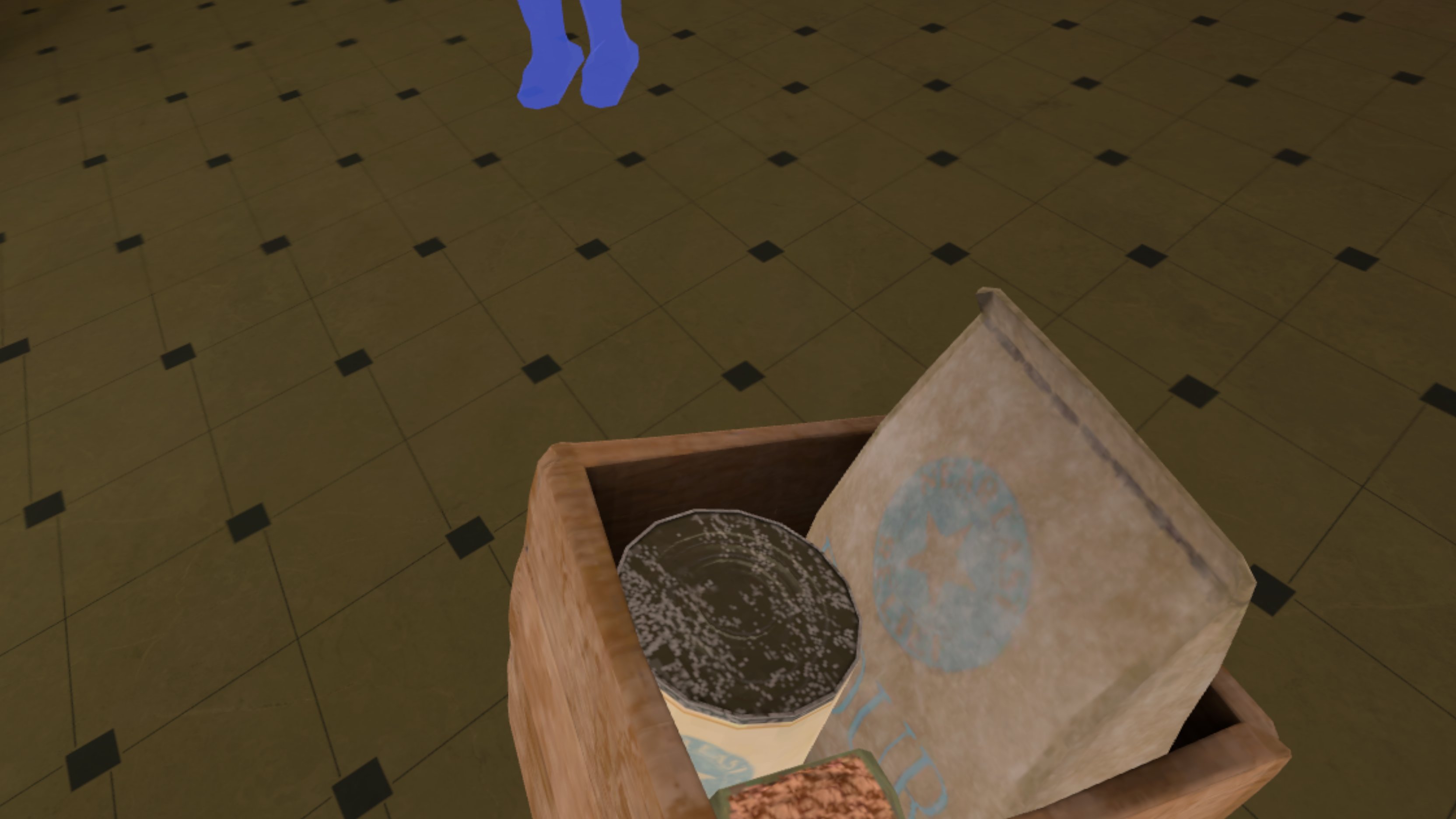
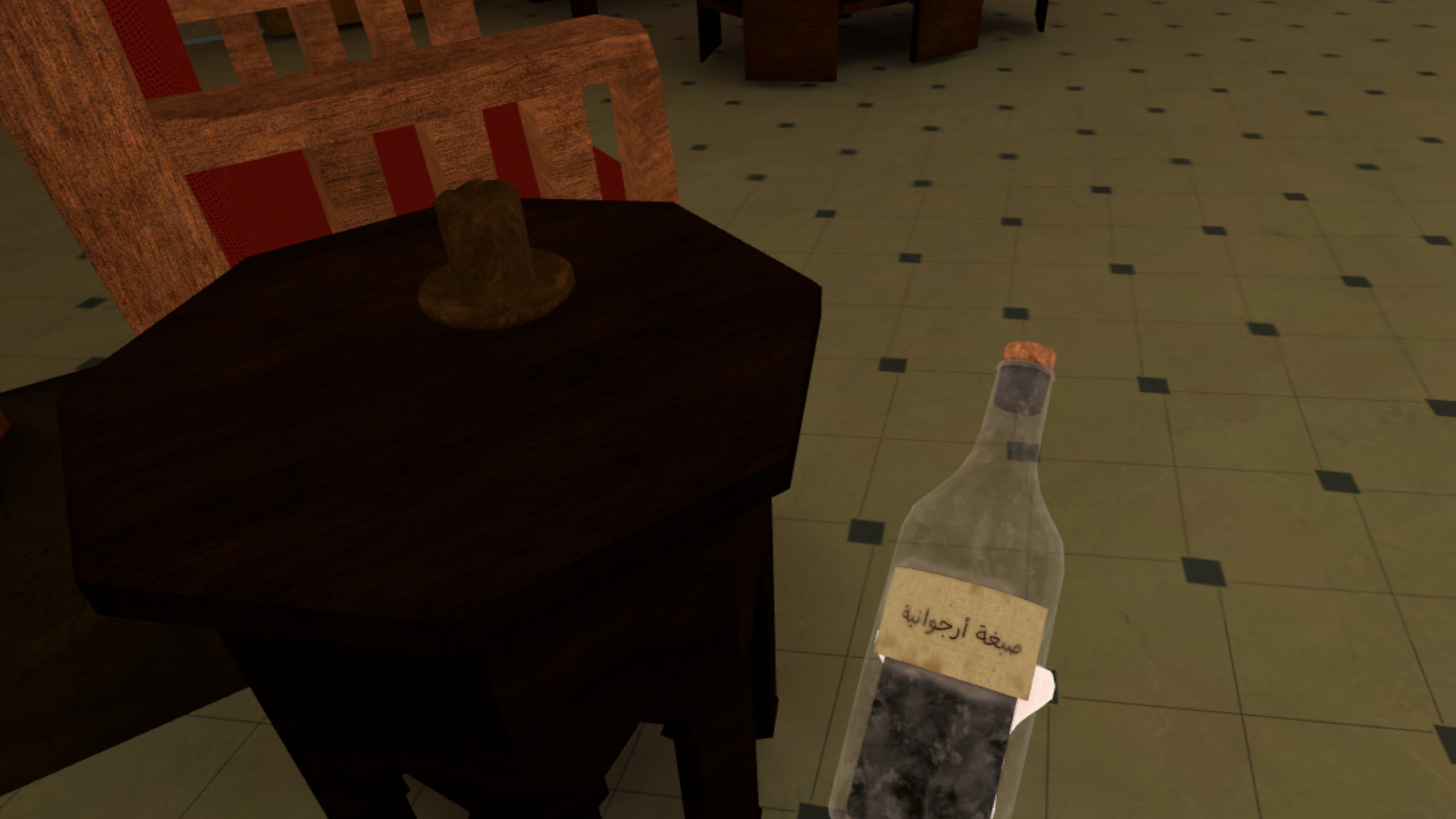
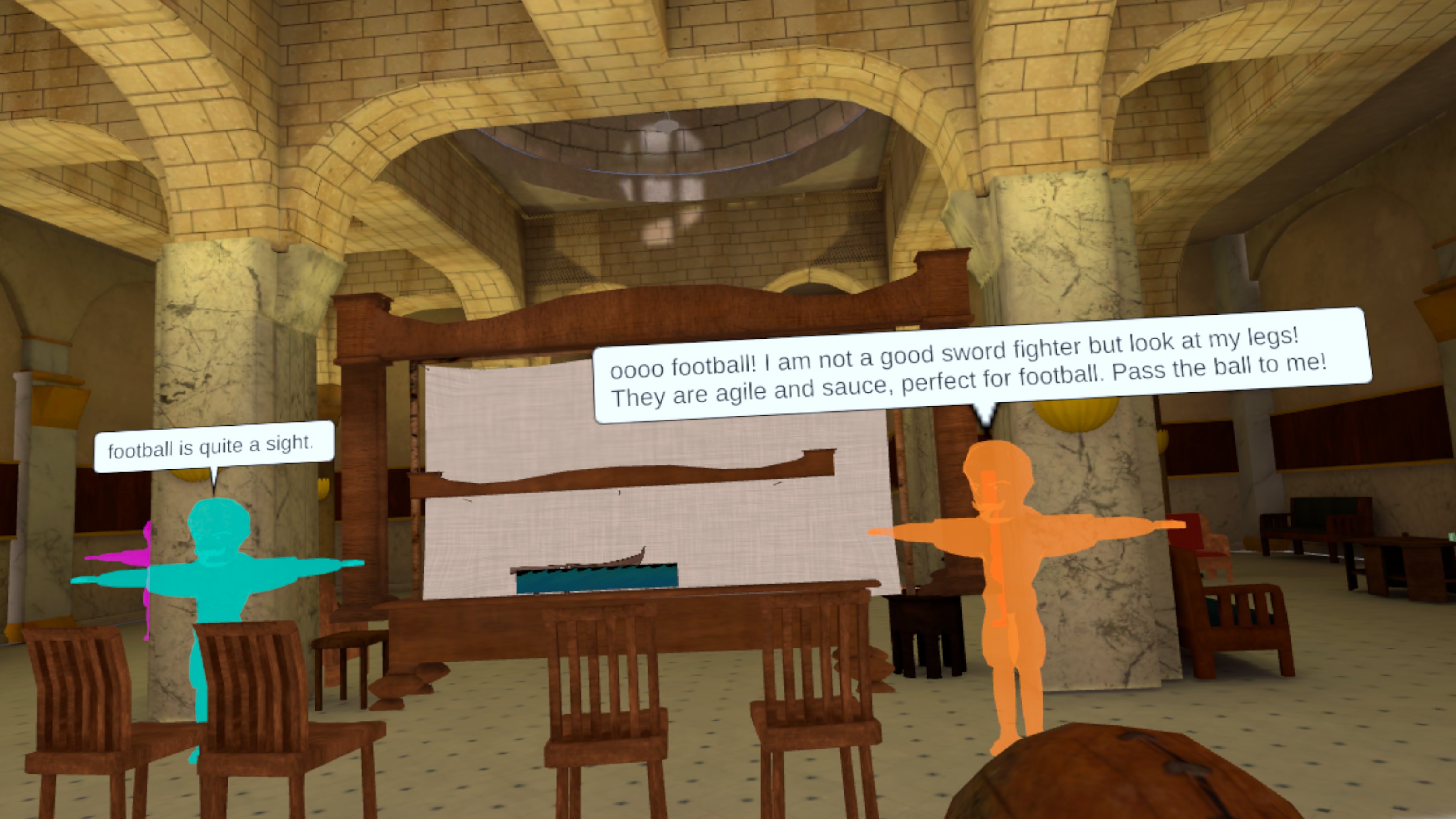
The current project build has 7 characters who all respond to the object held by the player. There are several objects scattered around the world. In the final version, the player will be able to perform several quests related to these heritage objects.
The .apk file can be loaded into a Quest 3 Headset if available.
Contact ken@uconn.edu for questions
https://abrahamicprograms.uconn.edu/
Why Aleppo?
Aleppo, Syria is one of the most historic and pluralistic cities in the world, going back hundreds of years of existence with Jews, Christians, and Muslims living together. Our project team, comprised of many faiths and cultural backgrounds, explores human rights and humanities themes through interactive narratives. We selected the city not only for its history but also because of the incredible people of Aleppo within the city and in the diaspora whom we have spoken with over the years.
Why make this a game?
Video games are an amazing storytelling medium capable of exciting players all over the world. Targeting both gamers and the public, we hope to share knowledge of a time when people in a pluralistic society could work together despite their differences. Engaging people from the city and throughout the greater diaspora, we aim to craft a narrative that celebrates the culture of the city through the eyes of everyday people and potentially aid in future reconstruction efforts. This project also supports the Digital Media & Design Department's research efforts to communicate humanities themes to a general audience.
Why an academic game?
Although a few games have “educational modes” many lack the design and educational scaffolding needed to communicate effectively. From the UConn Human Rights Institute website:
Art makes visible human rights, and their violation, helping us combat injustice.
Art strengthens mutual recognition, opening new spaces for dialogue and debate.
Art forges new potential futures, helping us envision a more moral and just society.
An English professor might author a book, a biologist might create a lab experiment, and digital media artists create games. We make art that tackles new and challenging subjects to educate people.
Our Creative Process
Through the creative process, we find it essential to collaborate with experts from a diverse body of knowledge. Games require many people to create, and by collaborating with storytellers and scholars from Aleppo in an all-day design charrette, the team is working to include stories from many perspectives. Games are an incredible medium capable of capturing this interplay through self-guided exploration and interacting with cultural arts. For instance, one of our collaborators discovered the largest known collection of Karagöz Shadow Puppets, which belonged to her great-great-grandfather, an Armenian puppeteer who moved to Aleppo during the Armenian genocide. You’ll be able to see, interact, and create your own shadow puppets in the final experience with specific information to ground these artifacts with thoroughly referenced research.
What about Aleppo in its current state?
Currently the people of Aleppo are under enormous strain after the civil war and earthquakes have destroyed much of the city. In fact, there are several existing VR projects that focus specifically on this destruction. Our goal is to remind everyone that beneath the destruction exists one of the most amazing and ancient cities in the world, one full of rich, multicultural stories.
Computer Requirements
Our current build has only been tested on Oculus Quest 3.
Core Team
Our team consists of current student game developers at the University of Connecticut in the Digital Media and Design Department. https://dmd.uconn.edu/major/concentrations/game-design/
- Kenneth Thompson, Assistant Professor in Residence – Project Director
- Heather Elliott-Famularo, Professor & Dept. Head
- Danial Ezzati, MFA (Master of Fine Arts)
- Tariq Rakha, MFA
- Christian Romero, MFA
- Maria Shurupova, MFA
- Marlee Susca, BFA (Bachelor of Fine Arts)
UConn Faculty/Staff Advisors
- Dr. Mohamad Alkadry
- John Bell
- Dr. Matthew Issac Cohen
- Dr. Kathy Libal
- Stacy Webb
- Dr. Daniel Weiner
- Emily Wicks
- External Advisors
- Zaid Eyadat
- Dr. Abraham Marcus
- Shadi Martini
- Tony Tahhan
- Sona Tatoyan
- Dr. Heghnar Watenpaugh
- Antoine Makdis
Puppets are a part of the handmade Karagöz shadow puppets of Abkar Knadjian, salvaged from Aleppo by his great great granddaughter Sona Tatoyan.
Our work would not be possible without our advisory board and support from funding from the University of Connecticut Global Affairs and the Levant Foundation.
Download
Install instructions
This in progress build has been verified with the Quest 3 via sideloading.
Leave a comment
Log in with itch.io to leave a comment.